Understanding the Connection Between Emotional Stress, Physical Tension, and the Pelvic Floor

Have you ever noticed your shoulders creeping up towards your ears after a long day? Maybe you wake up with soreness in your neck and jaw, realizing you’ve been clenching your teeth throughout the night. Do you catch yourself holding your breath when you’re having difficult conversations or experiencing nausea during periods of uncertainty?
These physical responses aren’t random. Our bodies are wired to be constantly responding to our environment and emotional experiences, oftentimes in ways that we don’t even realize.
We tend to think of stress as something that happens in our minds: the worry, racing thoughts, feeling overwhelmed, replaying experiences we’ve had throughout the day, or difficulty turning our brains off as we’re laying down for bed. But stress isn’t just a mental experience - it’s a physical one too.
Your Body Responds to What You’re Experiencing
Our nervous system is our body’s natural communication and protection system. When we encounter something stressful, the nervous system takes in the information and sends messages to different parts of the body that allow us to respond to the threat. This might look like increasing our heart rate, altering our breathing patterns, clenching our muscles to brace for impact, or becoming more alert and scanning our surroundings. These are all natural and adaptive processes that help us respond and take action when needed.
The problem isn’t that we have these responses to stress. We SHOULD have responses to stress and threat - it’s what keeps us alive! The problem can show up when we’ve spent prolonged periods of time in these states of stress without opportunities to slow down, recover, process the experience, and return to a sense of safety.
Over time, these patterns may become so familiar that we either aren’t able to register stress outside of extremely high levels or we stop noticing them altogether.
“If you listen to your body when it whispers to you, you won’t have to hear it scream.” — Deborah Jane Sutton
Where Does Stress Show Up in the Body?
Physical tension doesn’t look the same for everyone. Some people experience headaches, back pain, or tension in the jaw, while others experience impacts to their appetite, digestion, sleep, or energy levels.
For some, stress can also contribute to increased tension in the pelvic floor.

The pelvic floor muscles function to support the pelvic organs, assist with bladder and bowel control, contribute to to sexual functioning, and work alongside the diaphragm and core to support things like breathing, posture, and stability.
For individuals experiencing pelvic floor dysfunction, chronic stress, anxiety, and patterns of muscle guarding and tightening may contribute to symptoms such as pelvic discomfort, pain, or difficulty relaxing the muscles that can interfere with going to the bathroom, sitting for long periods of time, physical activity, intimacy, and medical procedures.
This does not mean that every physical symptom is caused by stress or that decreasing your stress alone will resolve the pelvic floor struggles. Physical symptoms deserve appropriate medical evaluation and care, and consulting with your primary care provider or pelvic floor physical therapists can be a great step in ensuring that you are addressing the full scope of your symptoms.
However, understanding the relationship between our emotional experiences and physical responses can often help us recognize another part of this picture that we may have been missing or help us feel more grounded and comfortable undergoing the treatment and healing process.
Creating Opportunities for Tension Release
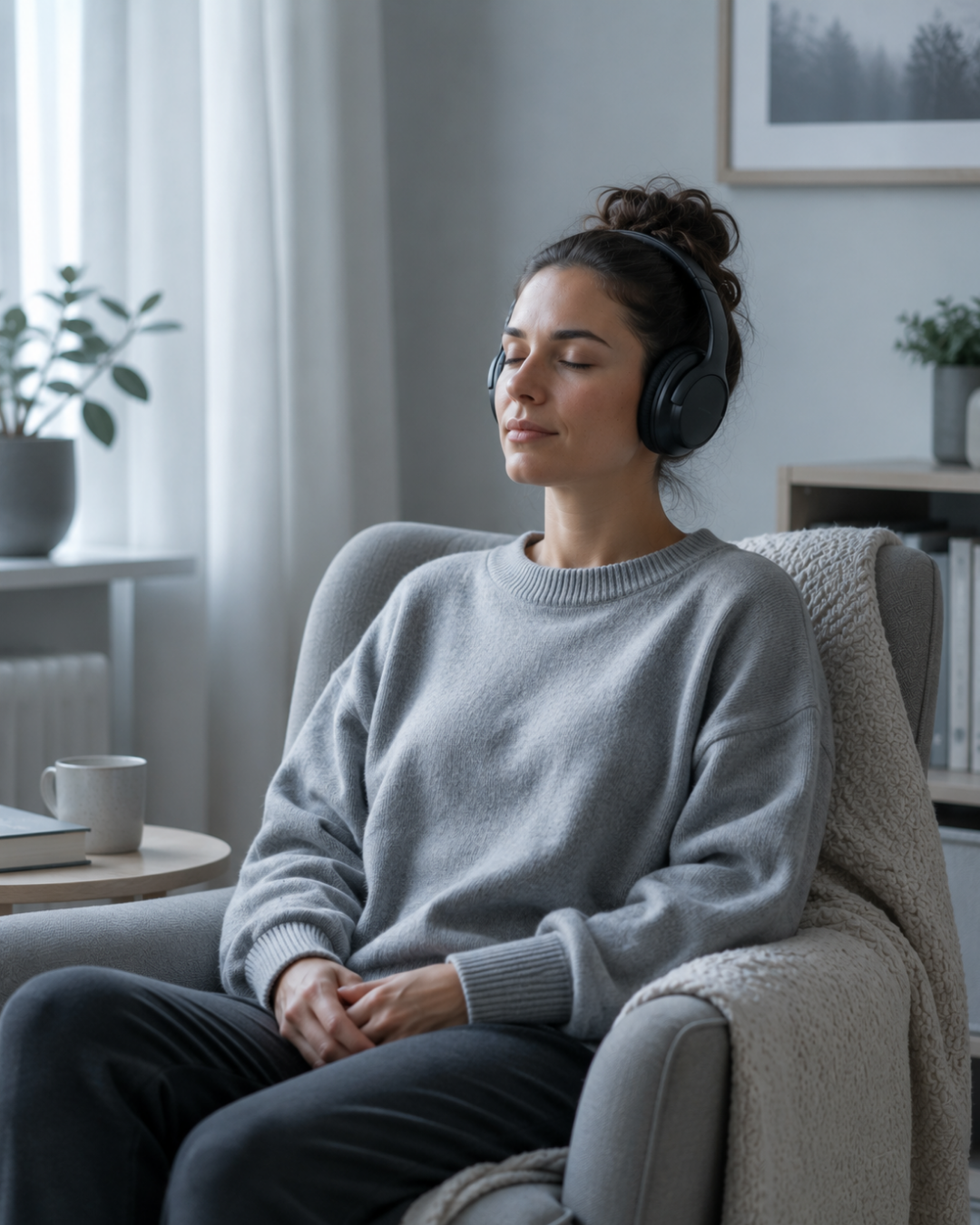
When someone has spent a long time operating in a state of stress (sometimes spanning years or even decades), relaxation often doesn’t feel as simple as taking a deep breath and telling yourself to calm down. It’s also not uncommon for slowing down to actually feel more uncomfortable and create feelings of restlessness, increased awareness of emotions or sensations, or guilt and shame around productivity.
This is all normal! The goal is never to force relaxation. It’s to begin to explore gradual steps to slowly move toward something different that allows your body more time, space, comfort, or safety.
Here are a couple areas to begin exploring:
Building Awareness: Can you take a moment to pause and just notice what sensations you feel without any pressure to change them? You can run through a gentle body scan, starting with your feet and moving your way up through your legs, pelvic floor, stomach, back, shoulders, hands, neck, and face.
Creating Pauses: Give yourself small moments throughout the day to step away from whatever task you’re doing. For many people, this sometimes starts with something as simple as a 15-second window to take a deep breath, stretch, roll out the neck, and shake out a little bit of tension through the hands.
Pacing and Mindfulness: Make a note to observe how quickly you are moving through tasks. Are you rushing through grocery store trips, jumping straight from one task into the next, eating your meals on the go, or trying to do multiple things at the same time? Experiment with slowing things down (even if just for 10 minutes) or giving your full attention to one task at a time.
Experimenting with Breath: Check in with the natural flow of your breath. Can you track how deep of a breath it is and where it travels? Count how long your inhales and exhales generally last. Without forcing anything uncomfortable, see if you can slow the breath down, find a deeper inhale, or stretch out and soften the exhale.
Your Body Isn’t Working Against You
It can be easy to get frustrated with ourselves and our bodies when we experience ongoing tension, discomfort, or related physical symptoms. We might feel like our body is constantly a problem, creating more issues for us to fix. The challenge is that the more stress we place on fixing these problems, oftentimes the more tension we end up carrying.
So what if we approached these experiences from a place of curiosity rather than judgment or expectation?
Instead of asking, “What’s wrong with me? Why can’t I just relax?” we might ask ourselves, “What might my body be responding to? What might it need to feel more supported, calm, or spacious?”
Our bodies are just as involved in our emotional experiences as our brains and can play a vital role in how we experience, process, and respond to the world and people around us. Understanding this connection means recognizing that our physical well-being also involves carrying for our emotional well-being.
We can start the process of supporting the body by just acknowledging and paying attention to what it has emotionally been carrying.